Map the people before mapping the route
Start by listing exactly who needs transportation. The couple may travel separately before the ceremony and together afterward. Parents, grandparents, the wedding party, or out-of-town guests may have different starting points and mobility needs. A private SUV is best suited to a defined small group, so decide which passengers are the priority before building the schedule.
Next, put every movement in order: first pickup, ceremony arrival, photo location if applicable, reception transfer, and final return. Note which passengers are in the vehicle for each leg. This simple passenger map prevents an important family member from being left without a plan and shows whether one vehicle can complete the sequence comfortably.
Choose point-to-point or hourly chauffeur service
Point-to-point transportation works well for one confirmed transfer, such as taking the couple from a hotel to the ceremony or returning a small guest group after the reception. Hourly chauffeur service is more practical when the same vehicle should remain available between several wedding-day movements or when the exact finish time may change.
Explain the complete schedule when requesting a quote. A short transfer followed by several hours of waiting is different from two separate rides. If the chauffeur needs to remain nearby during photos or a reception, include that expectation before booking. A clear service structure makes the timeline easier to follow and avoids assumptions on the wedding day.
Build backward from the ceremony arrival
The first firm time is usually when the passengers must be fully inside the ceremony location—not when the vehicle should reach the driveway. Work backward from that arrival goal. Allow time to unload, gather clothing and personal items, walk from the meeting point, and handle any instructions from the planner or venue.
Add a small cushion for group loading and ordinary road variation. Formal clothing, bouquets, gifts, and photography can make boarding slower than a normal trip. If a hotel elevator or valet is involved, choose a lobby-ready time rather than the time passengers intend to leave their rooms. The chauffeur can protect the drive portion of the schedule, but the group must be ready at the agreed pickup time.
- Separate the must-arrive time from the vehicle pickup time.
- Confirm the correct ceremony and reception entrances.
- Add planner or coordinator instructions to the itinerary.
- Decide which optional stop will be removed first if the day runs late.
Make every Dana Point pickup location specific
A hotel, resort, gated residence, coastal rental, and private home may each require a different approach. Share the full address along with the lobby, valet area, gate code, unit, driveway, or alternate meeting point. If several guests are staying at one property, choose one clear loading location rather than asking the chauffeur to search for separate groups.
For a residential pickup, name one person who will receive the arrival message and guide the group outside. For a hotel pickup, confirm the reservation name if it is needed for valet coordination. These details are small, but they prevent the first delay from pushing the rest of the wedding timeline behind.
Plan for clothing, passengers, and personal items
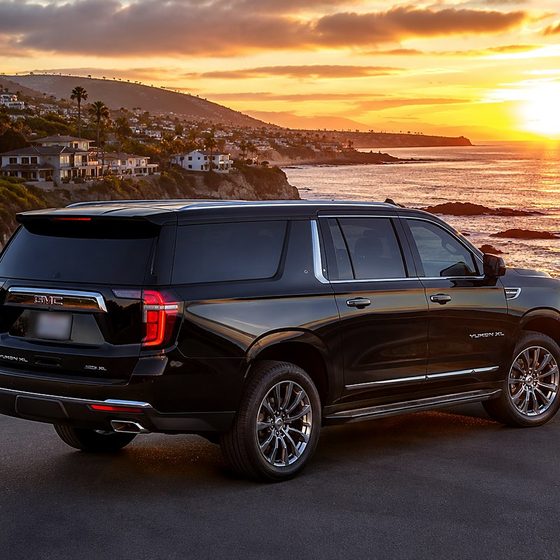
PCH Black Car operates a black 2024 GMC Yukon XL SLT with three rows and seating for up to seven passengers. The most comfortable number depends on clothing and what the group is carrying. Formal dresses, suit jackets, bouquets, garment bags, gifts, strollers, and overnight luggage can require more room than an ordinary local ride.
Provide an accurate passenger count and describe large items before booking. Keep rings, identification, medication, vows, and other essential objects with a responsible passenger rather than placing them inside a larger bag. Bottled water and phone charging are available in the vehicle, but the group should bring any specialized child-seat or accessibility equipment required for the trip.
Use one transportation contact
Choose one person other than the couple when possible to handle transportation communication. A planner, family member, or trusted wedding-party member can confirm that passengers are ready, send schedule changes, and answer questions about the next stop. One contact is more effective than several guests giving different instructions.
Send the chauffeur the final itinerary in writing and identify which times are fixed. If photography, the ceremony, or dinner runs late, communicate the new plan before the group changes locations. Do not assume that an open-ended extension will be available; ask whether the reserved service window can be adjusted.
Create a reliable end-of-night plan
The return trip deserves as much attention as the ceremony arrival. Decide who is riding, where each person will be dropped off, and whether the pickup time is fixed or connected to the reception ending. Guests may be tired, phones may be low, and venue loading areas can become busy when many people leave together.
Confirm the exact meeting point before the celebration begins. If the couple has a private departure, keep their vehicle plan separate from general guest transportation. For a small family group, arrange the order of hotel or residence stops in advance and tell the chauffeur about any passenger who needs extra boarding time.
What to include in the quote request
Send the wedding date, ready time, every pickup and destination, required arrival times, estimated finish, passenger count, and personal items that affect space. Include the planner's instructions and identify whether the vehicle should wait between stops. If some details are still being finalized, mark them clearly instead of filling the itinerary with guesses.
PCH Black Car provides a quote before booking and direct chauffeur communication for the trip. Reserve early enough to review the sequence and make sure the requested service window is available. When the timeline is ready, use the reservation form to request a quote for the complete Dana Point wedding transportation plan.